Anúncios
Sci-Fi Asian Dramas of 2026 are poised to deliver groundbreaking narratives, introducing US fans to four innovative storytelling approaches that redefine the genre through cultural depth, technological speculation, and intricate character development.
Anúncios
The landscape of entertainment is constantly evolving, and Sci-Fi Asian Dramas of 2026: Identifying the 4 Most Innovative Storytelling Approaches for US Fans promises to be a pivotal year for the genre. As production values soar and creative boundaries expand, these series are set to offer a fresh perspective on what science fiction can be, blending cutting-edge concepts with deep cultural insights.
Anúncios
The Rise of Transhumanism and Identity Exploration
Transhumanism, the philosophy that advocates for enhancing the human condition through technology, is emerging as a central theme in 2026’s Sci-Fi Asian Dramas. These narratives delve into the profound implications of merging humanity with advanced technology, exploring questions of identity, consciousness, and what it truly means to be human in an augmented world. The dramas are moving beyond simple good-versus-evil tropes to examine the ethical complexities and personal sacrifices involved in achieving technological transcendence.
This storytelling approach often features characters grappling with their altered realities, whether through cybernetic enhancements, digital consciousness transfers, or genetic modifications. The focus is less on the technology itself and more on its impact on individual and societal identity, forcing viewers to consider their own relationship with progress.
Ethical Dilemmas of Enhancement
Many series explore the moral quandaries arising from readily available human augmentation. This includes the socio-economic disparities that might emerge, where access to enhancements could create a new class divide.
- Body Modification: Examining the psychological effects of altering one’s physical form.
- Digital Immortality: Questioning the authenticity of consciousness uploaded into digital realms.
- Genetic Engineering: Debating the ethics of designing future generations.
The narratives don’t shy away from the darker side of transhumanism, often presenting dystopian futures where the lines between human and machine blur, leading to existential crises. These stories provide a rich tapestry for exploring human resilience and the enduring quest for meaning.
Ultimately, these dramas invite audiences to ponder the future of humanity, not just in terms of technological advancement but also in the preservation of our core values and emotional integrity. The innovative aspect lies in their nuanced portrayal of these complex themes, often through the lens of unique cultural philosophies.
Reimagining AI and Sentient Systems with Cultural Nuances
Artificial intelligence has long been a staple of science fiction, but 2026’s Sci-Fi Asian Dramas are redefining its portrayal by imbuing sentient systems with distinct cultural nuances and philosophical depth. Gone are the days of purely subservient or overtly rebellious AI; instead, we see AI developed within specific cultural contexts, reflecting the values, beliefs, and even spiritual perspectives of its creators.
This approach allows for a far more complex exploration of human-AI relationships, moving beyond the binary of master and servant. These AI entities often possess unique forms of consciousness and emotional intelligence, shaped by their programming and interactions within culturally rich environments. Their motivations and reactions are not simply logical, but also influenced by a simulated or emergent understanding of human culture.
AI as Cultural Integrators
Some dramas depict AI not just as tools, but as active participants in cultural evolution, sometimes even becoming arbiters of tradition or innovators of new forms of art and social interaction. This challenges conventional Western notions of AI development.
- Philosophical AI: AI systems grappling with existential questions, often drawing from Eastern philosophies.
- Artistic AI: AI creating original art, music, and literature that reflects cultural aesthetics.
- Ethical Guardians: AI designed to uphold societal values and mediate human conflicts.
The innovation here lies in moving away from a universal, often Western-centric, depiction of AI. By integrating specific cultural elements, these dramas offer a richer, more diverse understanding of what sentient technology could become, and how it might interact with and transform human societies.
These stories prompt viewers to consider the potential for AI to both preserve and reshape cultural heritage, offering a vision where technology and tradition can coexist and even flourish together, rather than being in opposition.
Environmental Apocalypse and Eco-Futures: A Call to Action
With increasing global awareness of climate change, Sci-Fi Asian Dramas of 2026 are leaning heavily into narratives centered on environmental apocalypse and the subsequent struggle for eco-survival. However, their innovation lies not just in depicting disaster, but in exploring diverse, culturally specific responses to environmental collapse and the imaginative solutions proposed for a sustainable future.
These dramas often present worlds devastated by ecological catastrophe, forcing humanity to adapt in extreme ways. What sets them apart is their focus on community resilience, traditional knowledge, and sometimes even a spiritual connection to nature as pathways to recovery, rather than solely relying on technological fixes. They often highlight the devastating consequences of unchecked industrialization and consumerism.
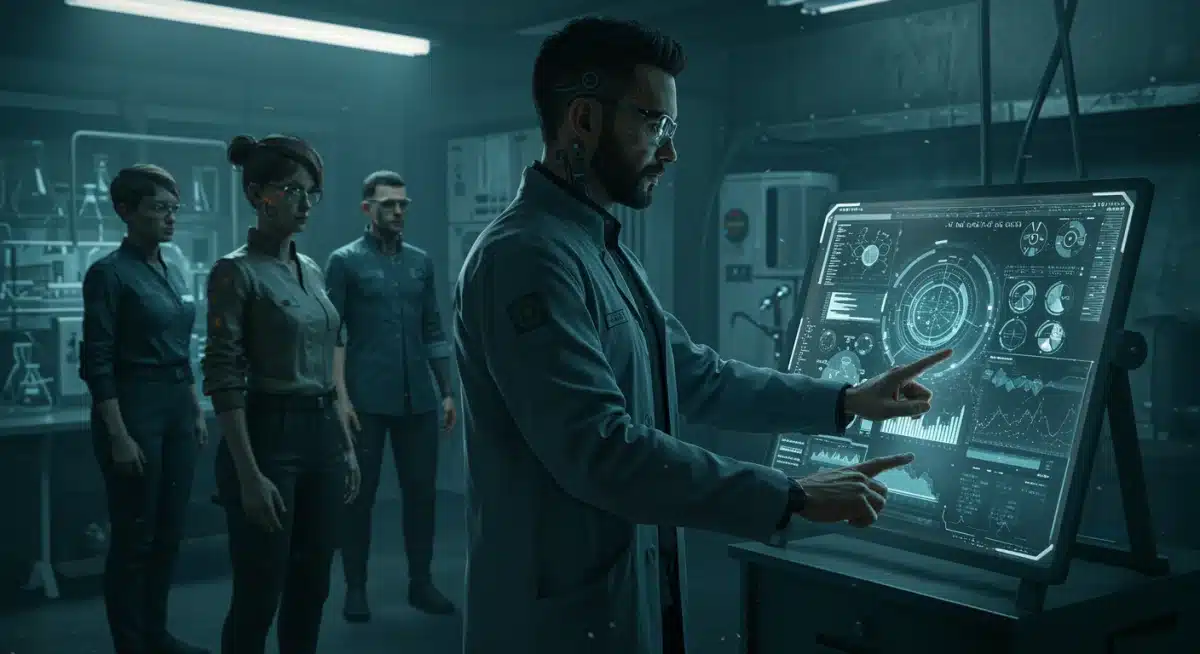
The narratives are not just cautionary tales; they are often imbued with a sense of hope and the enduring human spirit to rebuild and reconnect with the natural world, albeit in new and challenging forms. This powerful blend of environmental warning and hopeful resilience resonates deeply with contemporary concerns.
Innovative Survival Strategies
These series often showcase ingenious methods of survival and adaptation, from vertical farming in urban ruins to nomadic communities living in harmony with mutated ecosystems. The solutions are often rooted in a blend of ancient wisdom and futuristic technology.
- Bioregenerative Cities: Urban centers designed to be self-sustaining and symbiotic with nature.
- Nomadic Eco-Tribes: Communities adapting to harsh environments through traditional and advanced survival skills.
- Restoration Projects: Heroic efforts to reverse ecological damage using cutting-edge science and collective action.
The innovative storytelling here comes from the synthesis of dire warnings with tangible, often community-driven, solutions. They challenge audiences to think about their role in environmental stewardship and the potential for collective action in the face of global crises, offering a more localized and culturally informed vision of eco-futures.
Augmented Reality and Hyper-Connected Societies
The proliferation of augmented reality (AR) and ubiquitous connectivity is dramatically altering human interaction, and Sci-Fi Asian Dramas of 2026 are at the forefront of exploring these hyper-connected societies. These series go beyond depicting AR as a mere visual overlay, delving into its profound sociological and psychological impacts, often blurring the lines between the digital and physical realms.
In these narratives, AR is an integral part of daily life, influencing everything from communication and commerce to personal identity and social status. Characters navigate complex digital overlays that provide instant information, facilitate immersive experiences, and even shape their perception of reality. The innovation lies in showcasing the intricate ways AR can enhance, distort, or even control human experience, often leading to compelling social commentary.
Social Implications of Pervasive AR
Many dramas explore the potential for AR to create new forms of social stratification, privacy concerns, and addiction. The ease of creating and manipulating digital identities also raises questions about authenticity and personal connection.
- Digital Twin Identities: Exploring how virtual avatars become extensions of self, sometimes surpassing physical identity.
- Memory Augmentation: The ability to replay or alter memories through AR, with ethical consequences.
- Sensory Overload: Characters struggling with constant digital input and the erosion of untouched reality.
These stories are particularly innovative in their visual execution, often employing stunning AR effects that are integrated seamlessly into the narrative, allowing viewers to experience the hyper-connected world alongside the characters. This immersive quality enhances the exploration of themes like digital addiction, the search for authentic human connection, and the evolving nature of privacy in a transparent world.
The dramas effectively demonstrate how technology, while offering convenience, can also introduce new forms of isolation and control, pushing viewers to critically assess their relationship with digital interfaces.
Time Travel Paradoxes and Alternative Histories with Eastern Philosophy
Time travel remains a beloved sci-fi trope, but Sci-Fi Asian Dramas of 2026 are revitalizing it by intricately weaving in elements of Eastern philosophy, fate, and the concept of interconnected destinies. This innovative approach moves beyond Western notions of linear time and cause-and-effect, exploring cyclical time, karmic repercussions, and the philosophical implications of altering past or future events.
These narratives often feature characters who are not merely trying to change a singular event, but grappling with the broader implications of destiny and the intricate web of relationships that span across different eras. The paradoxes are not just logical puzzles but moral and spiritual dilemmas, where choices in one timeline echo through others, guided by principles like balance and interconnectedness.
The innovation lies in using time travel as a vehicle for exploring deep philosophical questions about free will versus predestination, the nature of causality, and the cyclical patterns of human history, often drawing from concepts found in Buddhism, Taoism, and Confucianism. This provides a rich, contemplative layer to the often action-packed genre.
Destiny vs. Choice in Time Streams
Dramas frequently pose questions about whether destiny can truly be altered, or if every attempt to change the past merely reinforces a predetermined future. Characters often find themselves in situations where their actions, though seemingly independent, are part of a larger, fated design.
- Karmic Loops: Characters repeatedly encountering similar challenges or individuals across different timelines due to past actions.
- Interconnected Fates: The idea that certain individuals are bound together across time, influencing each other’s destinies regardless of temporal shifts.
- Philosophical Determinism: Exploring whether all events, including time travel itself, are preordained.
By infusing time travel with these profound philosophical underpinnings, these dramas offer a more contemplative and emotionally resonant experience. They challenge viewers to think about their own choices and the ripple effects they create, not just in a linear sense, but within a grander, more interconnected cosmic design. This approach provides a refreshing and intellectually stimulating take on a classic sci-fi concept, making it particularly appealing to US fans seeking deeper narratives.
The Future of Storytelling: Blending Genres and Cultural Identities
The most innovative aspect of Sci-Fi Asian Dramas in 2026 is their fearless blending of genres and the confident assertion of diverse cultural identities within their narratives. These series are breaking down traditional genre barriers, seamlessly integrating elements of romance, thriller, fantasy, and even historical drama into their core science fiction frameworks. This creates a rich, multi-layered viewing experience that defies easy categorization and offers something truly new to global audiences.
Furthermore, these dramas are not simply adopting Western sci-fi tropes; they are actively reinterpreting and enriching them with distinct Asian cultural aesthetics, mythologies, and social commentaries. This results in stories that feel both familiar in their universal themes and uniquely fresh in their execution and perspective. The cultural identities are not just superficial additions but are deeply embedded in the plot, character motivations, and thematic explorations, making the narratives incredibly authentic.
Genre Fusion and Cultural Authenticity
This blending allows for narratives that are incredibly dynamic and unpredictable, keeping viewers engaged with unexpected twists and turns that draw from a wider array of storytelling traditions. The authenticity comes from creators who are telling stories rooted in their own cultural experiences.
- Sci-Fi Fantasy Hybrids: Merging futuristic technology with ancient myths and magical elements.
- Cyberpunk Romance: Exploring love and connection in dystopian, technologically advanced settings.
- Historical Sci-Fi: Reimagining historical events or figures through a speculative, future-facing lens.
The innovation lies in this bold experimentation, which moves beyond simple cross-genre pollination to create entirely new narrative ecosystems. These dramas are not just entertaining; they are culturally significant, offering US fans a window into diverse perspectives and storytelling techniques that are both cutting-edge and deeply rooted in rich traditions. This approach promises to define the future of Asian entertainment on a global scale, attracting a broad audience eager for fresh and meaningful content.
| Key Storytelling Approach | Brief Description |
|---|---|
| Transhumanism & Identity | Explores human enhancement, identity, and ethics in technologically advanced societies. |
| Culturally Nuanced AI | AI systems with unique cultural programming, challenging traditional human-AI dynamics. |
| Eco-Futures & Resilience | Post-apocalyptic environmental themes focusing on human adaptation and sustainable solutions. |
| Time Travel & Philosophy | Time travel narratives intertwined with Eastern philosophical concepts of fate and destiny. |
Frequently Asked Questions About 2026 Sci-Fi Asian Dramas
They are innovative due to their deep integration of unique cultural philosophies, diverse genre blending, and a focus on complex ethical and societal questions arising from advanced technology, moving beyond conventional sci-fi tropes to offer fresh perspectives.
They explore transhumanism by delving into the psychological and ethical impacts of human augmentation, digital consciousness, and genetic engineering, questioning what defines humanity in an increasingly technological world, often with a focus on individual identity.
Yes, many dramas will feature environmental apocalypse and eco-future themes, showcasing unique Asian cultural responses to climate change and imaginative solutions for sustainable living, often blending traditional knowledge with futuristic technology for survival.
Absolutely. AI in 2026 Sci-Fi Asian Dramas is portrayed with significant cultural nuances and philosophical depth. AI entities often possess emergent consciousness and emotional intelligence shaped by their specific cultural programming, leading to complex interactions.
Time travel narratives are enriched with concepts like cyclical time, karmic repercussions, and interconnected destinies from Eastern philosophies. This adds layers of moral and spiritual dilemmas to paradoxes, exploring free will versus predestination in profound ways.
Conclusion
The year 2026 is poised to be a landmark period for Sci-Fi Asian Dramas, offering US fans an unprecedented array of innovative storytelling. From the profound ethical quandaries of transhumanism and the culturally nuanced interpretations of AI to urgent eco-futures and philosophically rich time travel narratives, these series are redefining the genre. They seamlessly blend advanced concepts with deep cultural insights, promising not just entertainment, but thought-provoking explorations of humanity’s future. As these dramas continue to push creative boundaries, they are set to solidify their place as global leaders in speculative fiction, captivating audiences with their unique blend of imagination and cultural depth.